
What is Espresso (ESP) Coin?


Espresso (ESP) Coin has officially hit the crypto scene with its launch on the WEEX Exchange on February 10, 2026. This new listing, under the trading pair ESP/USDT, brings a promising digital asset to traders eager to explore its potential. As deposits and withdrawals will soon be made available, keen investors can dive into trading here. However, it is crucial to highlight that as Espresso navigates through its pre-market trading phase, users should be aware of certain risks, including insufficient liquidity and potential price fluctuations.
Espresso (ESP) Introduction
Espresso (ESP) is a high-performance Rollup platform designed to deliver a secure, fast, and seamless Layer 2 (L2) trading experience. Esteemed by major blockchain teams like Offchain Labs and Polygon, Espresso stands out with a robust infrastructure that enhances transaction efficiency across decentralized networks. By leveraging cutting-edge technology, it addresses the common blockchain scalability issues, offering users expedited transactions while reducing costs.
Who created Espresso (ESP) Coin?
Espresso was developed by a collaborative team of blockchain experts, engineers, and technologists at Espresso Systems. The company focuses on optimizing blockchain ecosystems by providing scalable solutions to enhance L2 processing capabilities. Drawing from years of experience in the blockchain industry, the team ensures Espresso upholds its credibility by aligning with trusted partners such as ApexChain and Celo.
How does Espresso (ESP) Crypto Work?
Espresso operates on an advanced Rollup framework that aggregates numerous transactions off the main blockchain, processes them, and then posts a summary back to the main chain. This process significantly speeds up transaction times while lowering fees. It acts as a conduit for secure interactions, maintaining transparency through cryptographic proofs that validate all on-chain activities.
How is Espresso (ESP) Crypto Used?
Primarily, Espresso facilitates high-speed trading and direct investments on L2 platforms. Its advanced capabilities make it an appealing choice for developers and enterprises seeking scalable solutions for smart contracts and decentralized applications. Moreover, by integrating with leading blockchains, Espresso opens avenues for cross-chain compatibility, enabling users to leverage its benefits across multiple network platforms.
How Do You Buy Espresso (ESP)?
Purchasing Espresso (ESP) is straightforward and accessible, especially now that it’s live on the WEEX Exchange. To begin trading ESP/USDT, new users should first register on WEEX, whereas existing users can log in on WEEX. After securing your account, you can proceed to trade ESP and USDT. For a direct buying experience, visit the trading platform to exchange funds.
Is Espresso (ESP) Coin a Good Investment?
Determining whether Espresso (ESP) is a wise investment depends on various factors, including market trends, user adoption, and technological advancements. As a blockchain professional, I can attest to the platform’s comprehensive infrastructure, which bodes well for long-term growth and potential price appreciation.
Currently, analysts suggest that Espresso’s integration with top-tier blockchain teams positions it favorably within the crypto space. However, it remains crucial to acknowledge market uncertainties, particularly the risks associated with pre-market trading, such as price volatility and liquidity constraints.
In analyzing Espresso’s growth potential, its consistent partnerships and ongoing development initiatives reflect a robust trajectory. Nevertheless, like any crypto investment, buyers must exercise caution and avoid overcommitting financially without sufficient research and due diligence.
In conclusion, Espresso (ESP) Coin represents a forward-thinking innovation in L2 scalability with promising applications. However, prospective investors should weigh potential risks against anticipated rewards before engaging heavily.
DISCLAIMER: WEEX and affiliates provide digital asset exchange services, including derivatives and margin trading, only where legal and for eligible users. All content is general information, not financial advice—seek independent advice before trading. Cryptocurrency trading is high-risk and may result in total loss. By using WEEX services, you accept all related risks and terms. Never invest more than you can afford to lose. See our Terms of Use and Risk Disclosure for details.
You may also like

What is World Cup Doge (WCDOGE) Coin? Is WCDOGE a Good Investment?
What is WCDOGE crypto? Meme token or football fan play? Real data, honest risks, and how to buy World Cup Doge.

SIM Owner Details: Legal PTA Check and Safety Guide
Learn what SIM owner details means, how to check SIMs on your CNIC through official PTA channels, and how to avoid lookup scams.
NBIS Stock: What Nebius’ AI Cloud Surge Means Now
NBIS stock jumped as Nebius reported rapid AI cloud growth. See the key Q1 2026 numbers, catalysts, valuation risks, and what to watch next.

WXT Bounty Hunter Program Explained: Earn Crypto Rewards While Learning to Trade on WEEX
The WXT Bounty Hunter Program is a WEEX campaign running from May 8 to May 18, 2026, designed to help beginners learn crypto trading while earning rewards.
Users complete simple tasks like depositing USDT, trading WXT, and holding tokens to receive WXT rewards. New users can earn bonuses such as 200 WXT, while advanced users can compete for larger rewards based on trading activity, including a 100,000 WXT prize pool.
The program uses net metrics (deposits and buys minus withdrawals) to ensure fairness and excludes institutional trading. Holding 300 WXT also unlocks extra benefits like enhanced airdrops.
Overall, it combines learning and earning, making it an entry point into crypto trading on WEEX.

Grass Token Price: GRASS Live Data, Drivers, and Risks
Track Grass token price, market cap, supply, unlocks, and key GRASS price drivers before trading the Solana AI and DePIN token.

WCOR Coin Explained: World Collective Oil Reserve on Solana
WCOR coin is a Solana token tied to an oil-reserve registry narrative. Here’s what it claims, current data, and the risks traders should watch.
What Is SAOS Crypto? Can SAOS Hit $0.1?
Is SAOS crypto a hidden gem? Strategic American Oil Supply on Solana explained. No hype, just data: $75K cap, locked LP, RWA narrative.
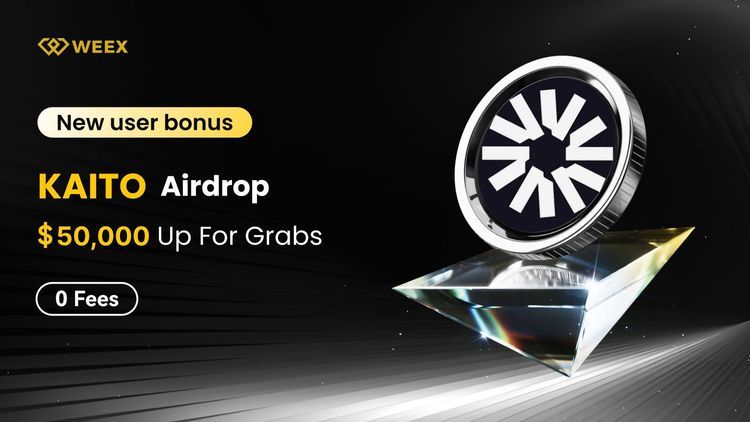
KAIO Airdrop: Share 50,000 USDT on WEEX with 0-Fee Trading
Trade KAIO/USDT with 0 fees on WEEX from May 7–14, 2026. New users can complete deposit and spot trading tasks to share 50,000 USDT in rewards.

What Is SAOS? Strategic American Oil Supply Token Explained
SAOS is a meme token on Solana with a 75,000 USD market cap and 22,000 USD locked liquidity, positioned around oil supply themes but lacking real asset backing
It thrives on pure narrative speculation, with no utility, website, or doxxed team, making it highly volatile and attention-dependent
Traders should distinguish SAOS from legitimate real-world asset projects, as its branding is speculative rather than substantive
Positive aspects include locked liquidity reducing rug pull risks, but low trading activity signals high uncertainty
How to Buy Public Asset Control (PAC) Token in 2026: Latest Solana Buying Guide
How to buy Public Asset Control (PAC) token in 2026, PAC contract address, Solana wallet setup, Jupiter swap guide, latest price, liquidity, and risks.

What Is Public Asset Control (PAC) Token and How Does It Work? Latest Solana PAC Token Guide
Public Asset Control (PAC) token explained. Learn what PAC is, how it works on Solana, current price snapshot, risks, and buying basics.

Can PAC Coin Reach $1 Soon? Analyzing Public Asset Control
PAC is a Solana-based meme token with a government-themed narrative, but it is highly speculative.
At its current price (~$0.0009) and 1B supply, reaching $1 would require a $1B market cap, which is very unlikely.
Short-term moves to $0.001 or $0.01 are more realistic, but the token is highly volatile due to low liquidity and hype-driven trading.
Overall, $1 is not a realistic target, and PAC is better suited for short-term speculation than long-term investment.

United Nations Oil Reserve (UNOS) Crypto: Solana Token, UN Links, and Risks
United Nations Oil Reserve (UNOS) Crypto explained: Solana token basics, UN links, oil-backing claims, market risks, contract checks, and buying cautions.

What Is Public Asset Control (PAC) Coin? Explained for Beginners
Public Asset Control (PAC) is a Solana-based token that uses a “government asset control” narrative involving oil and gold themes, but it has no verified ties to any real institutions or governments. It is mainly an entertainment-focused, speculative meme coin.
The project’s claims about links to entities like BlackRock or Palantir are unverified, and its own disclaimer states it is not a real financial or institutional asset. Like many new Solana tokens, PAC is highly volatile, with low liquidity and limited transparency, including no fully verified audit.
Overall, PAC is a high-risk speculative token driven by hype and storytelling rather than real utility. Beginners are advised to be cautious, verify contract details, and prioritize risk control before considering any trading.
What Is Official Saudi Oil Reserve (OSOR) Coin?
Learn what OSOR coin is, why its Saudi oil narrative matters, how to verify the contract, and what risks to check before trading.
Global Digital Oil Reserve (GDOR): What It Is, Risks, and How to Check It
Global Digital Oil Reserve (GDOR) is an oil-themed Solana token with unclear backing. Learn its risks, market data, and verification checklist.

Is OBC Crypto a Good Investment?
Is OBC crypto a good investment? We analyze the latest market data, holder concentration, liquidity risks, and short-term momentum. Read this before you invest in OBC token.

Can OSOR Reach $1? Full Price Analysis 2026
OSOR crypto price prediction 2026: Can Saudi Oil Reserve token reach 1? Read before buying.
What is World Cup Doge (WCDOGE) Coin? Is WCDOGE a Good Investment?
What is WCDOGE crypto? Meme token or football fan play? Real data, honest risks, and how to buy World Cup Doge.
SIM Owner Details: Legal PTA Check and Safety Guide
Learn what SIM owner details means, how to check SIMs on your CNIC through official PTA channels, and how to avoid lookup scams.
NBIS Stock: What Nebius’ AI Cloud Surge Means Now
NBIS stock jumped as Nebius reported rapid AI cloud growth. See the key Q1 2026 numbers, catalysts, valuation risks, and what to watch next.
WXT Bounty Hunter Program Explained: Earn Crypto Rewards While Learning to Trade on WEEX
The WXT Bounty Hunter Program is a WEEX campaign running from May 8 to May 18, 2026, designed to help beginners learn crypto trading while earning rewards.
Users complete simple tasks like depositing USDT, trading WXT, and holding tokens to receive WXT rewards. New users can earn bonuses such as 200 WXT, while advanced users can compete for larger rewards based on trading activity, including a 100,000 WXT prize pool.
The program uses net metrics (deposits and buys minus withdrawals) to ensure fairness and excludes institutional trading. Holding 300 WXT also unlocks extra benefits like enhanced airdrops.
Overall, it combines learning and earning, making it an entry point into crypto trading on WEEX.
Grass Token Price: GRASS Live Data, Drivers, and Risks
Track Grass token price, market cap, supply, unlocks, and key GRASS price drivers before trading the Solana AI and DePIN token.
WCOR Coin Explained: World Collective Oil Reserve on Solana
WCOR coin is a Solana token tied to an oil-reserve registry narrative. Here’s what it claims, current data, and the risks traders should watch.


